Millington-Inspired Designs
I have examined a number of books on curve stitching, but my favorite
remains Jon Millington’s Curve Stitching: The Art of Sewing
Beautiful Mathematical Patterns. Millington’s designs, as the
subtitle suggests, all have a mathematical basis. Like Millington, I
have generally avoided “cute” designs.
I have concentrated on my own designs, but some of
the patterns in Curve Stitching are both interesting and attractive.
For a change of pace, therefore, I decided to use my computer to reproduce, in
substance, designs that Millington executed in cardstock and thread.
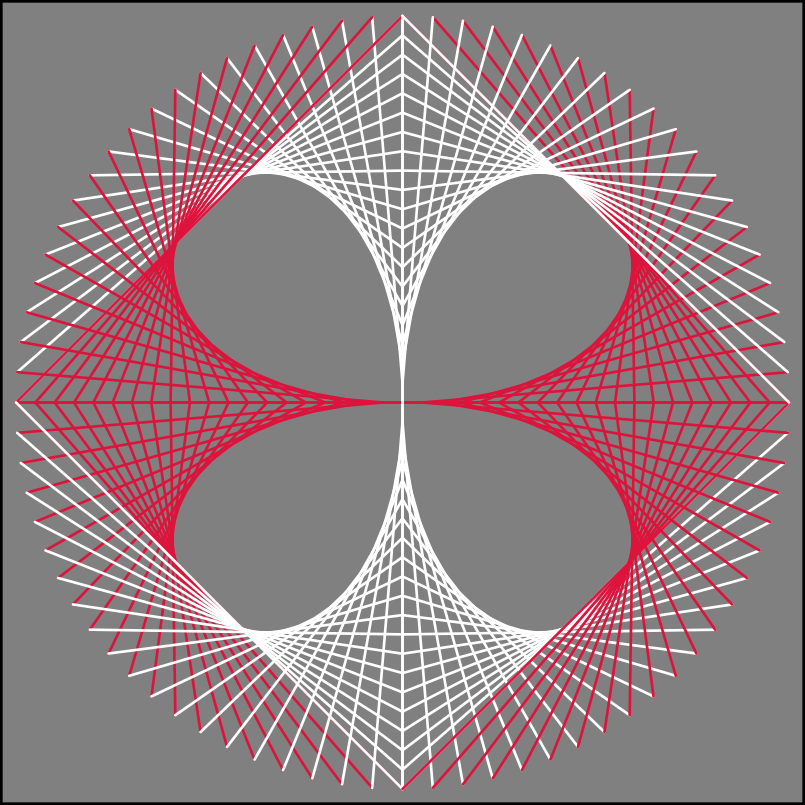
This first design is a close reproduction of one that
appears on the cover of Millington’s book. I have tried to use the same colors
and approximate the same number of lines. This figure is particularly interesting, as it
combines the technique for curve-stitch parabolas along with points on an
enclosing circle.
This next figure is also from the Curve Stitching
cover. A straightforward design has been made more interesting by using two
colors and eliminating the lines that would otherwise meet in the middle (the
arms of the parabolas).
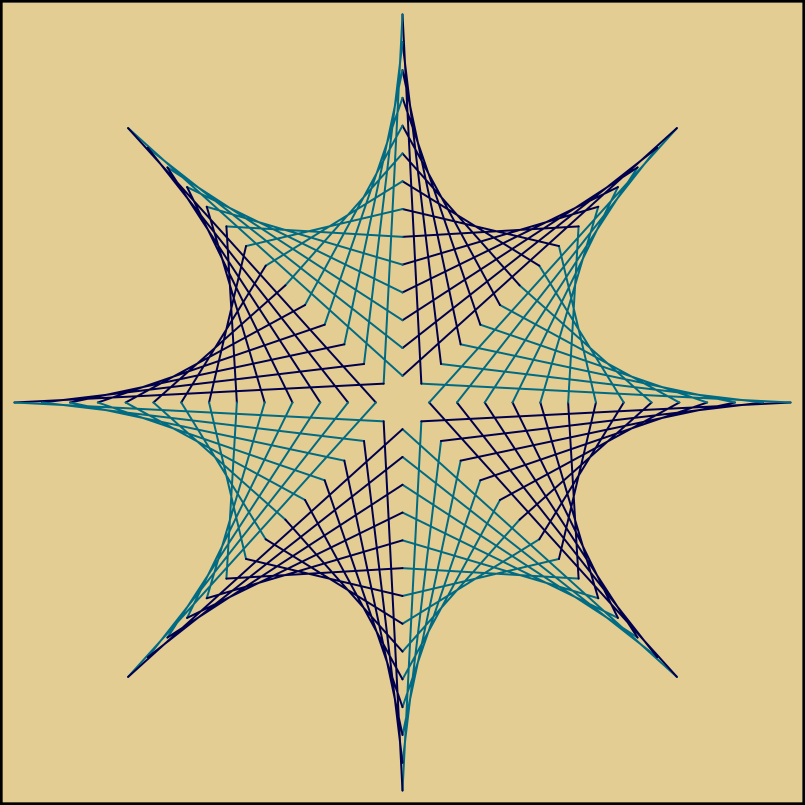
The above design is inscribed in an unseen octagon. I
decided to generalize this design by employing polygons with more sides.
Increasing the number of sides to 10 gave a figure that simply had more
radiating points. Using a 20-sided polygon, however, brought a surprise. (See
the figure below.)

Stepping back from this image, one begins to see
distinct light and dark concentric circles. How many distinct circles do you see
in the next figure? The polygon now has 60 sides. (As I increased the number of
sides, I decreased the width of the lines to make the figure clearer.)

This next figure is taken from the introductory page of
Millington’s second chapter. His figure uses white lines on an orange background.
I’ve chosen to use a different background. Notice that the figure is symmetric
across either diagonal, a feature that I took advantage of to cut the programming effort nearly in
half.
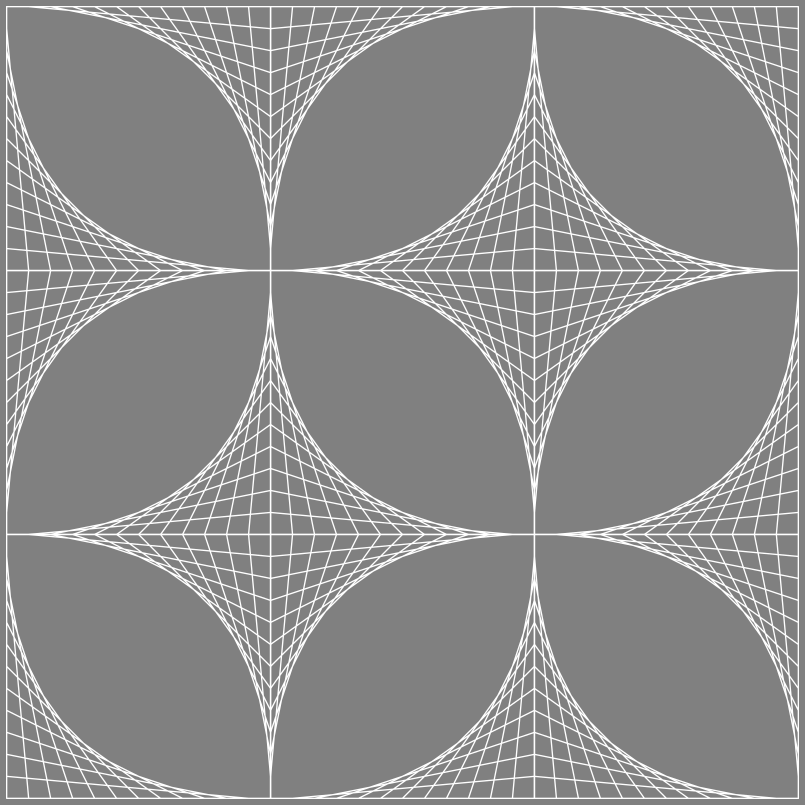
Once I developed the above image, I asked myself if I
could tile the plane with it. The answer yes. I leave it to the reader to figure
out how.
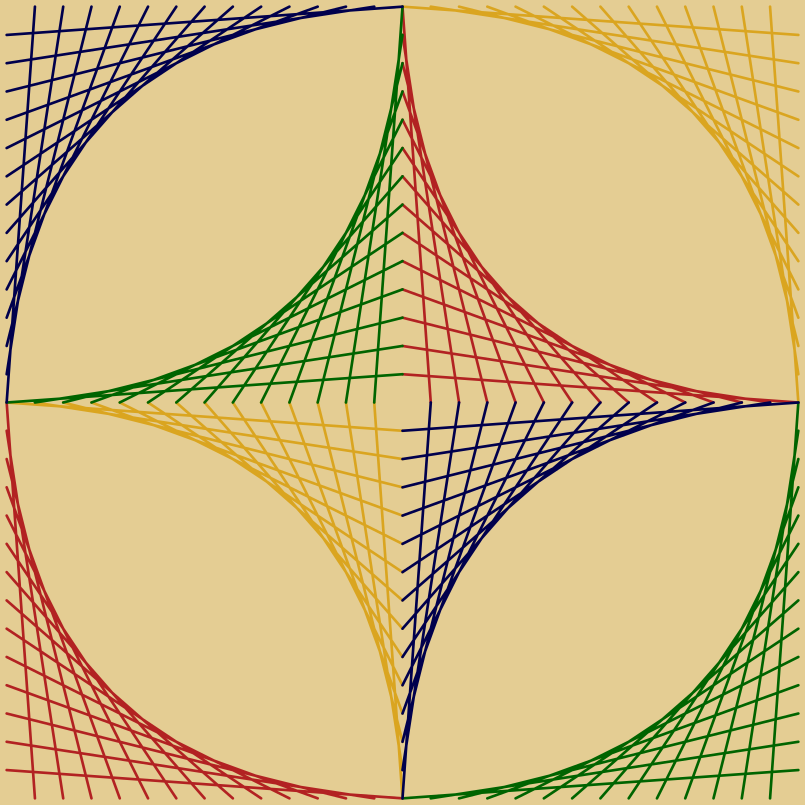
Millington seems particularly fond of curve-stitch
parabolas with arms omitted. This next design is copied from the title page of his second chapter.
It uses 8 curve-stitch parabolas with the arms omitted.
This final figure is a cardioid. I have used a darker
backgrand than did Millington.

— LED, 4/8/2024 |



