More Nested Parabolas
Having completed the previous page of designs,
I did not expect to devise more figures using nested parabolas anytime
soon. I soon realized, however, that the circular designs I had devised
with nested parabolas could be drawn by rotating the sets of parabolas
by 180 degrees. Here is an example of what I had in mind:

As I played with designs created this way, I
realized that (1) I could describe them using the nomenclature adopted for
earlier figures (see Some
Circular Designs and following) and (2) a degenerate (or, if you prefer,
simple) case of this new class of designs duplicates a degenerate case of the
earlier designs.
The arms—I sometimes have referred the edges of a
curve-stitch parabola as axes—are divided into some number of segments.
The number of parabola nests arranged in a circular fashion is referred to as
the number of wedges in a figure. The number of parabolas in each nest
(or wedge) is described as the number of levels of the figure. Using this
nomenclature, the figure above employs 2 levels, 5 wedges, and 15 segments. This
new family of designs differs from the earlier ones beginning with the second
level. If only one level is presented, we can duplicate a design shown earlier.
(See the fourth figure on
Some Circular Designs (Page 2):
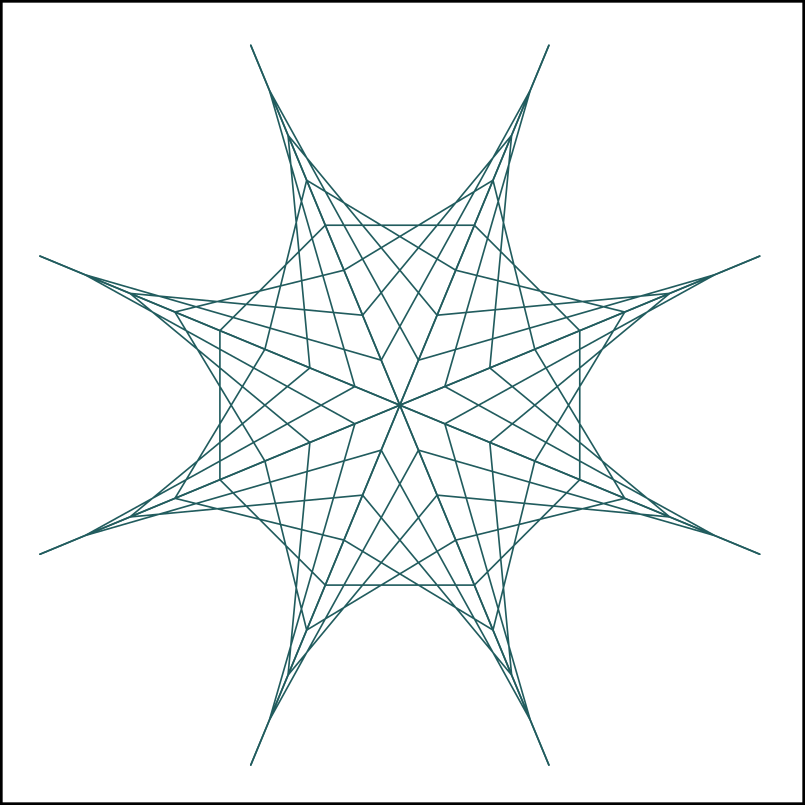
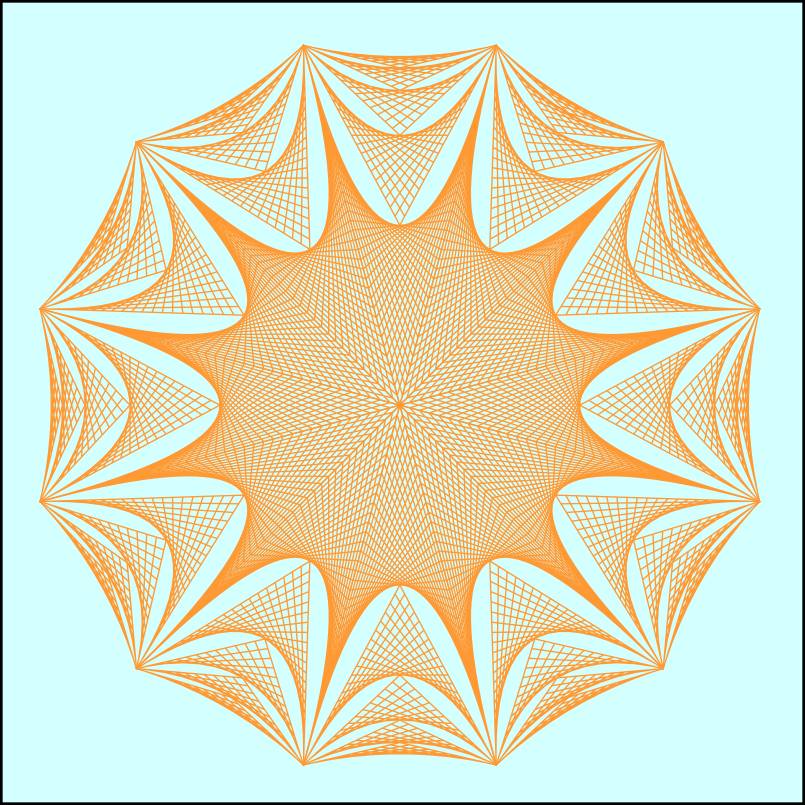
Below is a more interesting figure. It uses 12
wedges, 5 levels, and 10 segments. Notice that the length of the segments grows
larger near the center of the figure.

Two modifications were to produce the next figure.
Segment lengths were made uniform, and the width of the lines was reduced. Also,
notice that adding levels has practical limits, as the outer levels become
progressively compressed.
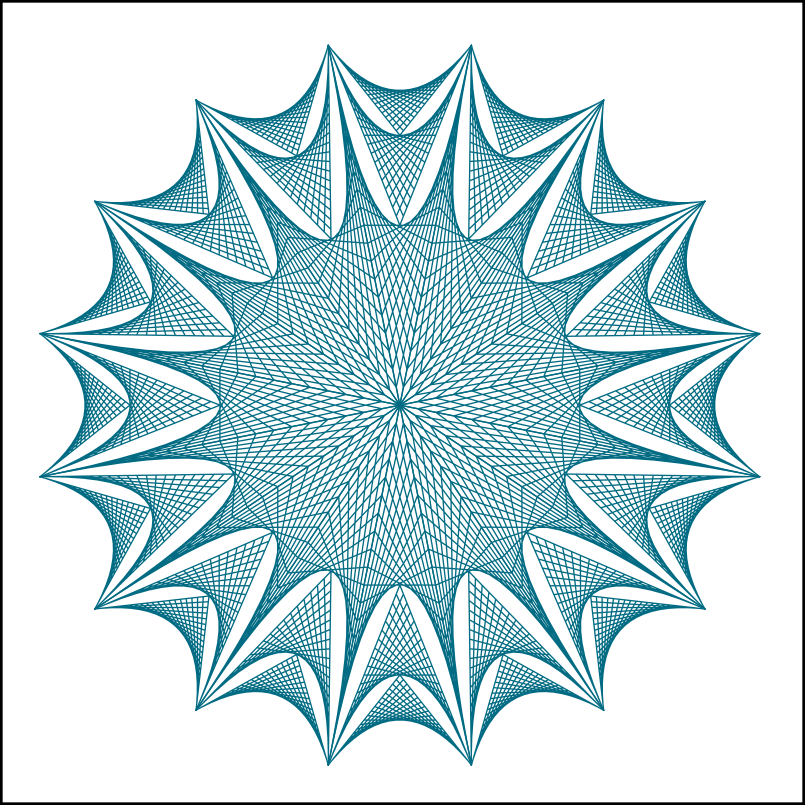
Figures are perhaps more attractive if the number of
levels is kept small. Here is a figure using 3 levels and 16 wedges.
Interestingly, simpler figures have an interest of
their own. In the figure below, segments has been reduced to 3, and the line
width has been increased. The scarcity of lines makes the nature of the design
less obvious. Also, since parabola arms are divided into only three segments,
there is no horizontal line intersecting the midpoint of the next lower level.
This happens whenever the number of segments is odd, but the phenomenon is not
obvious in more complex designs.

Pleasing designs can be generated by
combining constructions we have seen earlier. The figure below is based on an
anonymous design I found on Facebook. A square encloses the figure, and two sets
of parabolas are drawn within it. Both sets use adjacent sides as arms. One set
uses entire edges as arms; the other uses arms whose endpoints are the midpoints
of the edges.
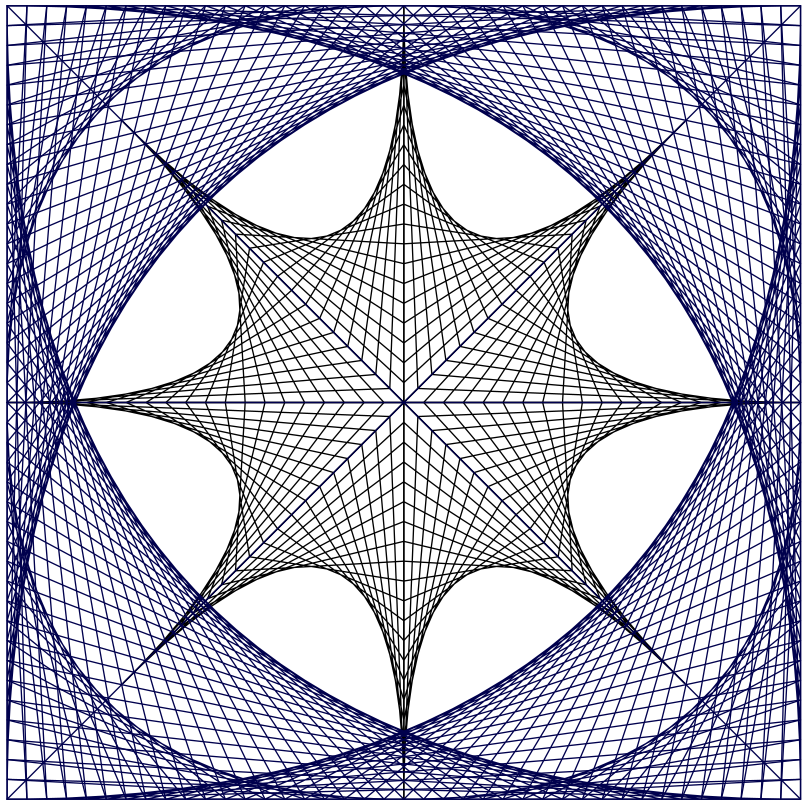
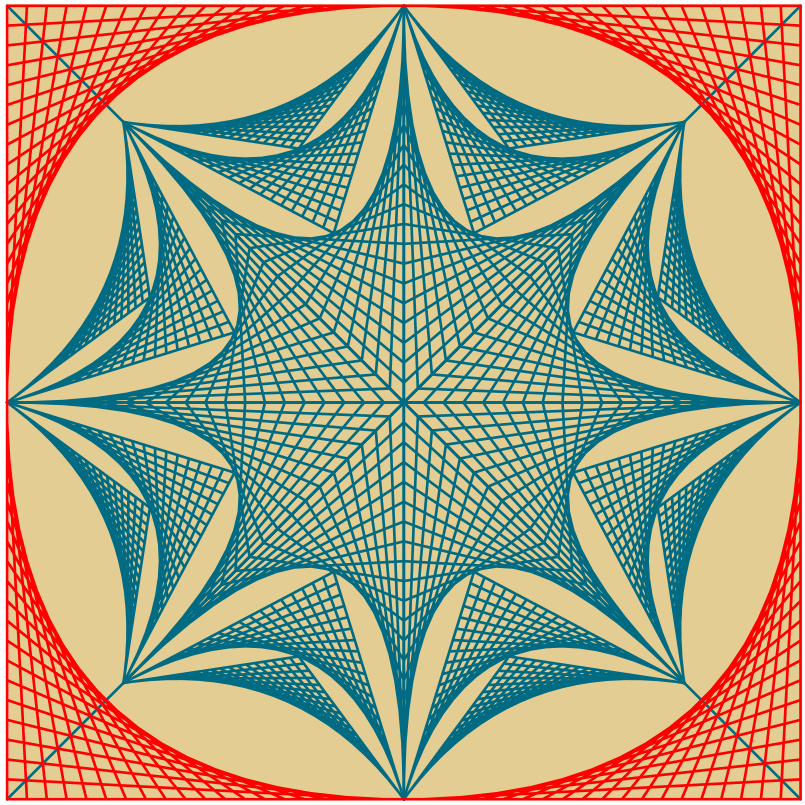
We can now employ our nested parabolas
in the center of the figure and eliminate the larger parabolas drawn in the
square, as they make the figure a bit confusing. Different colors are used here.
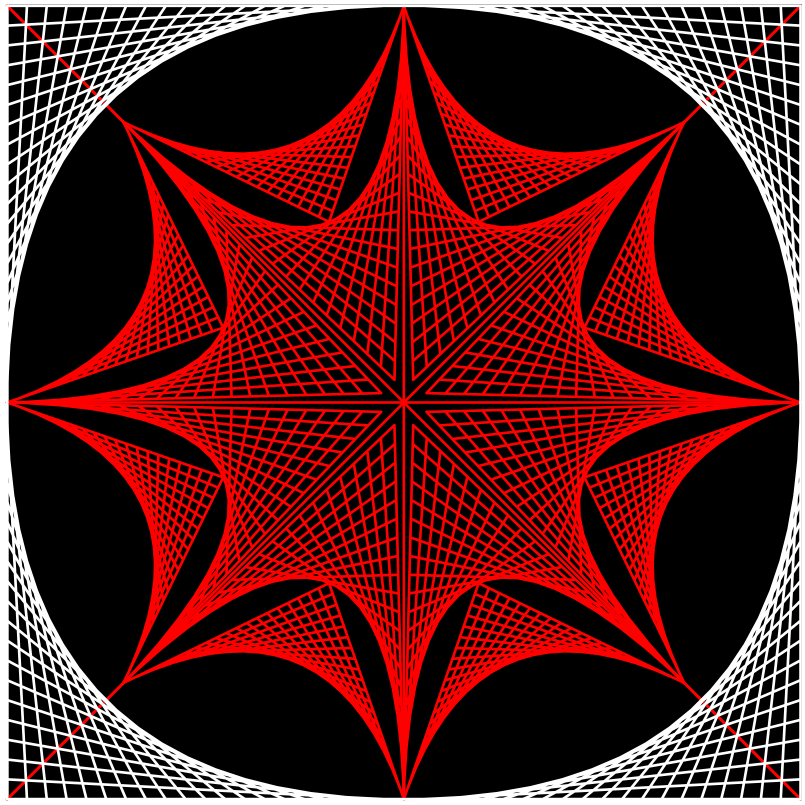
While making these designs, i
accidently discovered that the inner layer of parabolas could be narrowed to
create space between them. The figure below illustrates this.

Filling in the gaps with the obvious
diagonals, yields a subtly different figure.
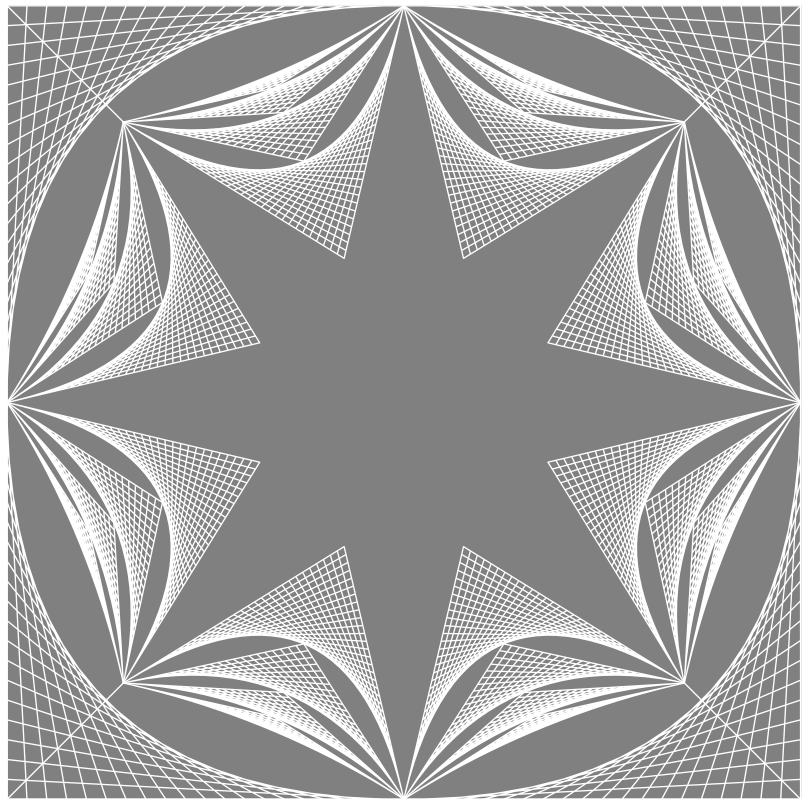
Many variants on the ideas explored
above. Here is a final figure, in which the central parabolas have been reduced
even further.
— LED, 8/4/2024, rev. 6/13/2025 |



